Three different fields
The glyph is the written sign. Its Latin value is a sound or transliteration used for reference. A traditional gloss summarizes a name or association. Keep those roles separate when reading.
A closer look · 01
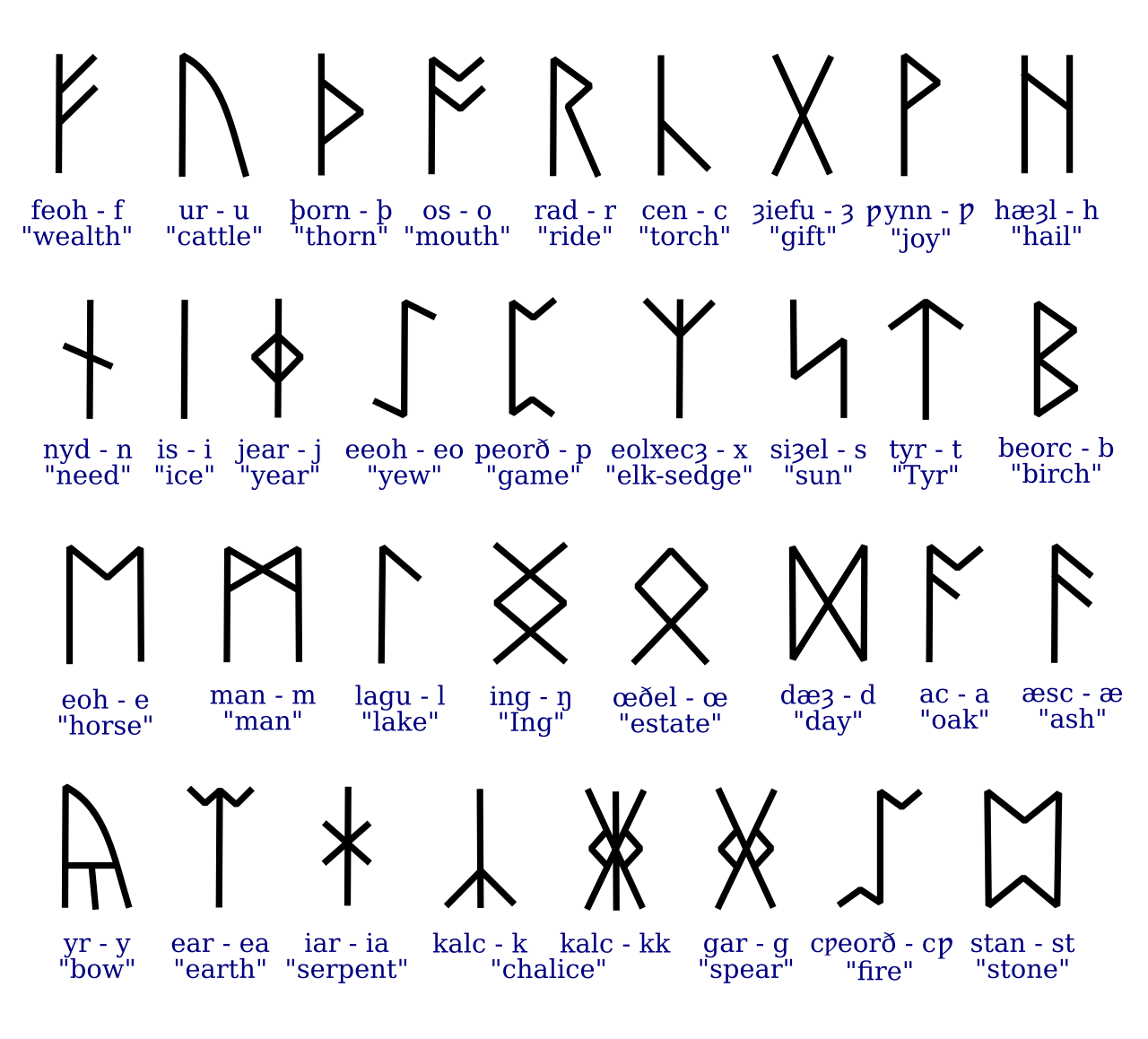
A searchable reading guide to the Anglo-Saxon rune chart you shared. Compare each sign with its name, Latin value and traditional gloss—while keeping historical variation in view.
A useful chart, not a single fixed historical list.
01 / Your reference
The original image stays here for comparison. The searchable cards below reorganize its information into a readable, bilingual guide.
02 / Browse the signs
Search by rune name, letter value or gloss. The first 28 and six additional forms are grouped for browsing, not presented as a universal sequence.
Sound buttons speak example words guided by Rune School’s Modern English Futhorc suggestions. Examples are approximate; browser voices and accents vary. Rune School reference ↗
34 signs shown
No signs match that search. Try a rune name, value or gloss.
03 / Reading carefully
Names and short glosses help identify a rune. They are not automatic translations of words or inscriptions.
The glyph is the written sign. Its Latin value is a sound or transliteration used for reference. A traditional gloss summarizes a name or association. Keep those roles separate when reading.
Futhorc inventories, order, shapes and names changed by place and period. This page follows the supplied 34-entry chart for convenience; it does not claim that every sign formed one standardized historical row.
Where a gloss is disputed, unknown or specific to the supplied image, the card says so. For example, the chart’s “serpent” and “fire” glosses do not appear as settled readings in every reference.
Sources & further reading